
SAP Fullstack development encompasses the entire development spectrum within the SAP ecosystem, combining frontend user experience design with backend business logic and data processing. This holistic approach enables the creation of complete, integrated solutions that deliver exceptional user experiences while leveraging SAP’s powerful business processing capabilities.
A true SAP fullstack solution integrates:
Discover how our fullstack approach delivers faster results and better business outcomes.
We analyze business needs holistically, considering both user experience requirements and backend processing constraints to create comprehensive solution designs.
Our architects design complete solutions that optimize data flow between frontend and backend components while ensuring security, performance, and maintainability.
Cross-functional development teams build frontend and backend components in parallel using agile methodologies adapted for SAP environments.
We validate solutions across all layers, from unit tests of backend components to user experience testing of frontend interfaces, ensuring quality throughout.
SAP-specific DevOps practices enable consistent, repeatable deployments with minimal disruption to business operations.
End-to-end applications that guide users through complex business processes while ensuring data integrity and compliance with business rules.

Solutions that combine intuitive data visualization with high-performance backend processing to derive insights from large, complex datasets.
Applications that orchestrate workflows spanning multiple SAP and non-SAP systems, providing users with an unified experience across organizational boundaries.
Secure, responsive applications that extend critical business processes to mobile devices while maintaining tight integration with core SAP systems
Interactive dashboards and reporting solutions that transform raw SAP data into actionable business insights through intuitive visualization and exploration tools.
ABAP programs facilitate complex data migration scenarios and implement specialized data management routines that maintain data quality and ensure business continuity during system transitions.
Let’s discuss how our fullstack approach can address your specific business challenges.
For a European chemical industry company, we implemented integration between 5 business units with 5 Salesforce instances, 3 SAP instances, and approximately 10 interfaces per business unit, including customer master data, orders, invoices, and deliveries. The project covered operations in Poland and Germany, with migration from SAP PO to SAP Integration Suite.
Client
Leading Retail Chain
Challenge
The client’s SAP PO platform couldn’t scale or support growth, hindering integrations with modern systems and rapid innovation.
Sulution
Introduction of SAP Integration Suite and migration of selected integrations to a new platform
Results
For a global manufacturing equipment provider, we created 30 interfaces connecting their Salesforce instance with SAP IS across EMEA, APAC, Americas, and Africa regions, using both API and event-based approaches for customer data, orders, and inventory management.
Client
Global Chemical Manufacturer
Challenge
A global manufacturer faced scaling issues with SAP PO after acquisitions, slowing A2A/B2B integration and operations.
Sulution
Results
Client
Industrial Equipment Manufacturer
Challenge
BizTalk’s outdated system blocked modernization, creating inefficiencies and adaptation challenges.
Sulution
Results
Our structured approach to SAP development has been refined across numerous projects, enabling consistent, high-quality delivery even for complex solutions.
Whether you’re looking for tailored migration solutions or just need more information, we’re here to support you every step of the way. Fill out the form below, and we’ll get back to you promptly.
Radosław Ruciński
SAP Integration Architect / co-owner
tel: +48 450 064 128
e-mail: radoslaw.rucinski@sygeon.com
SAP fullstack development bridges traditionally separate domains – frontend UI development, backend ABAP programming, database optimization, and integration services – into a cohesive approach. This integration eliminates handoffs between specialized teams, reduces misalignment between layers, and enables faster delivery of complete solutions that provide better user experiences.
No, fullstack approaches can benefit any SAP landscape. While S/4HANA and cloud platforms offer expanded capabilities, we can implement fullstack solutions in traditional ECC environments by leveraging technologies like Fiori, OData, and modern ABAP techniques. Our approach adapts to your current landscape while preparing for future evolution.
Properly designed fullstack solutions generally reduce maintenance costs through better architecture, more consistent implementation patterns, and improved documentation across all layers. With our approach, you gain a more holistic understanding of your applications, making future modifications and enhancements more efficient.
Absolutely. We frequently collaborate with client teams, transferring knowledge and building capabilities in fullstack approaches. We can structure engagements to complement your team’s existing strengths while filling gaps in either frontend or backend expertise.
We implement security by design, addressing authentication, authorization, data protection, and audit requirements consistently across all application layers. Our approach includes security reviews at each development stage and leverages SAP’s built-in security frameworks while implementing additional controls as needed.
Yes, our fullstack approach is ideally suited for Agile development. The integrated nature of our teams enables rapid iteration through complete slices of functionality, delivering working features that include both frontend and backend components in each sprint.
We carefully evaluate each requirement to determine the optimal approach, leveraging standard SAP functionality where it meets business needs while implementing custom solutions where they provide strategic advantage. This balanced approach minimizes total cost of ownership while maximizing business value.
SAP Business Technology Platform provides valuable services for extending and enhancing SAP systems. Depending on your landscape and requirements, we leverage BTP capabilities including the ABAP environment, API management, integration services, and low-code tools to complement traditional development approaches.
The traditional model of SAP development relied heavily on specialized roles – ABAP developers, UI designers, basis administrators – working sequentially on different aspects of solutions. While this approach leveraged deep expertise in each domain, it created silos that impeded communication and often resulted in suboptimal user experiences, extended development cycles, and integration challenges.
Modern SAP fullstack development represents a significant evolution, bringing together frontend and backend expertise in cross-functional teams that collaborate throughout the development lifecycle. This integrated approach aligns with contemporary software development methodologies, enabling faster feedback loops, more cohesive architectures, and solutions that better address end-user needs while respecting the complexity of enterprise systems.
The transition to fullstack development doesn’t diminish the importance of specialized knowledge. Rather, it places that expertise within a broader context where specialists collaboratively solve business problems. By establishing common goals, shared understanding, and consistent implementation patterns across all layers, organizations reduce the friction that traditionally hindered SAP projects, resulting in faster delivery and higher-quality outcomes.
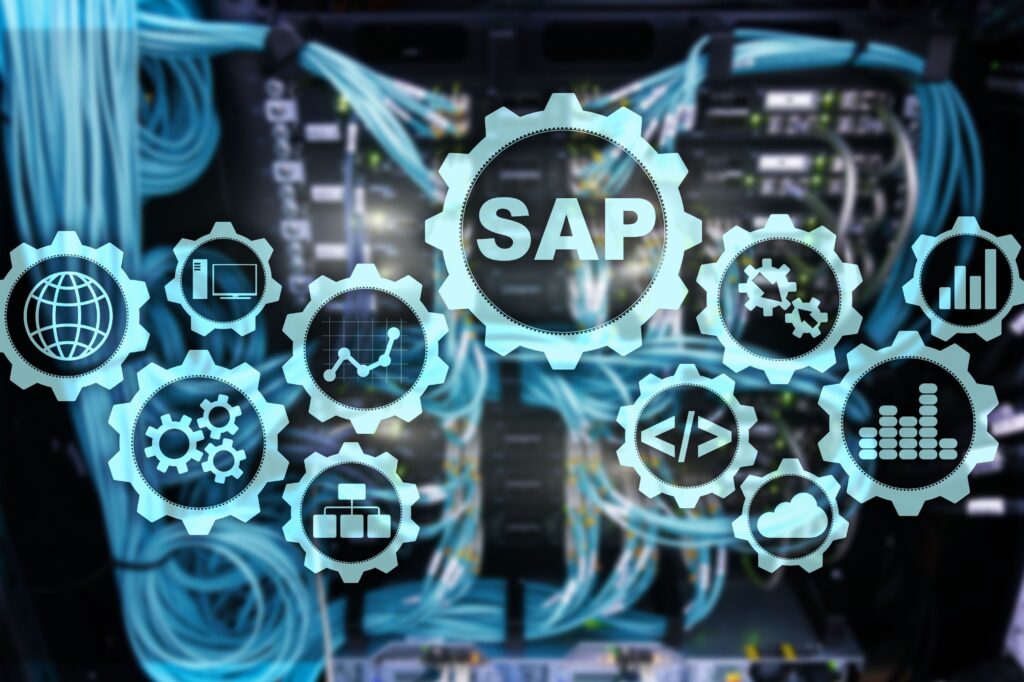

Cloud platforms have fundamentally changed how organizations approach SAP development. The SAP Business Technology Platform (BTP) provides a rich set of services that complement traditional ABAP development, enabling hybrid approaches that combine the strengths of established SAP systems with the agility of cloud-native services.
For fullstack developers, BTP offers compelling capabilities including simplified frontend development, API management, integration services, and low-code tools. These services enable new architectural patterns that extend core SAP functionality while maintaining consistent governance and security. Rather than replacing traditional skills, cloud platforms expand the toolkit available to developers, enabling more flexible approaches to solving business problems.
Organizations increasingly adopt evolutionary strategies that gradually incorporate cloud capabilities alongside existing systems. Fullstack teams excel in these hybrid environments because they understand both traditional SAP architecture and modern cloud patterns. This breadth of knowledge is essential for designing solutions that leverage the best of both worlds, ensuring continuity for critical business processes while enabling innovation at the edges.
The adoption of DevOps practices in SAP environments represents a significant shift in how organizations develop, deploy, and maintain business applications. Traditional SAP development often involved lengthy release cycles with manual transport management, creating bottlenecks that limited responsiveness to changing business needs.
Modern SAP fullstack development incorporates DevOps principles adapted for the unique characteristics of SAP systems. Continuous integration tools automatically validate changes across frontend and backend components, ensuring consistency between layers and reducing integration issues. Automated testing frameworks verify business functionality, performance, and security, enabling more frequent releases with greater confidence.
Deployment automation remains challenging in SAP landscapes due to the complexity of interdependent components and the business-critical nature of systems. Advanced teams implement sophisticated tools that analyze dependencies, manage transports, and coordinate releases across development, testing, and production environments. These capabilities enable controlled, predictable deployments that minimize business disruption while accelerating the delivery of new features and enhancements.

tel: +48 450 064 128
e-mail: contact@sygeon.com
Globis Globe Trade Centre
Roosevelta 18
60-829 Poznań
NIP 7811909564