
SAP Fiori is a user experience (UX) design system that delivers a consistent, intuitive interface across SAP applications. SAPUI5 is the underlying HTML5-based framework that powers Fiori applications, providing responsive design and rich interactive capabilities. Together, Fiori and UI5 transform traditional SAP interfaces into modern, role-based applications that:
Discover how our Fiori/UI5 expertise can improve productivity and satisfaction across your organization.
We analyze your users' needs, workflows, and pain points through interviews, observations, and data analysis to identify key improvement opportunities.
Our UX experts create wireframes and interactive prototypes based on Fiori design principles, iterating with your stakeholders to refine the solution.
Using SAPUI5 and modern development practices, we build applications that connect seamlessly with your SAP and non-SAP backend systems.
Comprehensive testing ensures optimal performance, usability, and compatibility across browsers and devices before deployment.
We handle the technical implementation while providing training and support materials to ensure successful user adoption.

Role-based dashboards provide real-time visibility into key performance indicators, enabling informed decision-making across departments from finance to manufacturing.
Intuitive mobile-enabled approval applications streamline processes like purchase requests, time approvals, and expense management from any device.

Employee and manager self-service applications empower users to access and update their information, reducing administrative overhead and improving data accuracy.

Touch-optimized interfaces for manufacturing environments enable efficient production recording, quality management, and maintenance activities.
Interactive data visualization tools transform complex business data into actionable insights through intuitive filtering, drilling, and comparative analysis.

ABAP programs facilitate complex data migration scenarios and implement specialized data management routines that maintain data quality and ensure business continuity during system transitions.
Schedule a personalized demonstration of how our solutions can address your specific business challenges.
For a European chemical industry company, we implemented integration between 5 business units with 5 Salesforce instances, 3 SAP instances, and approximately 10 interfaces per business unit, including customer master data, orders, invoices, and deliveries. The project covered operations in Poland and Germany, with migration from SAP PO to SAP Integration Suite.
Client
Leading Retail Chain
Challenge
The client’s SAP PO platform couldn’t scale or support growth, hindering integrations with modern systems and rapid innovation.
Sulution
Introduction of SAP Integration Suite and migration of selected integrations to a new platform
Results
For a global manufacturing equipment provider, we created 30 interfaces connecting their Salesforce instance with SAP IS across EMEA, APAC, Americas, and Africa regions, using both API and event-based approaches for customer data, orders, and inventory management.
Client
Global Chemical Manufacturer
Challenge
A global manufacturer faced scaling issues with SAP PO after acquisitions, slowing A2A/B2B integration and operations.
Sulution
Results
Client
Industrial Equipment Manufacturer
Challenge
BizTalk’s outdated system blocked modernization, creating inefficiencies and adaptation challenges.
Sulution
Results
From initial concept through design, development, and deployment, we provide comprehensive services that ensure successful implementation and adoption.
Whether you’re looking for tailored migration solutions or just need more information, we’re here to support you every step of the way. Fill out the form below, and we’ll get back to you promptly.

Radosław Ruciński
SAP Integration Architect / co-owner
tel: +48 450 064 128
e-mail: radoslaw.rucinski@sygeon.com
Standard Fiori apps are pre-built applications provided by SAP that cover common business processes. Custom Fiori apps are developed specifically for your organization’s unique requirements. Many organizations use a mix of both, implementing standard apps where possible and developing custom solutions where necessary for competitive advantage.
Yes, Fiori/UI5 applications can integrate with various SAP backends including ECC, S/4HANA, and SAP BTP. The implementation approach depends on your current landscape, but integration is possible without requiring a complete system upgrade.
We recommend starting with high-frequency, high-impact processes where improved usability would deliver significant business value. This might include widely used approval workflows, data entry processes, or reporting functions used by numerous employees.
Fiori applications are inherently responsive and work across devices. For specific mobile scenarios, we can implement offline capabilities, device-specific features (like camera or GPS integration), and optimize for mobile data consumption based on your requirements.
Project timelines vary based on complexity and scope. Simple applications might be delivered in a few weeks, while complex solutions with extensive backend integration can take several months. We typically recommend an iterative approach, delivering value incrementally rather than waiting for a complete solution.
Fiori’s intuitive design typically reduces training requirements by up to 50% compared to traditional SAP interfaces. The consistent design patterns across applications mean that once users learn one Fiori app, they can more easily understand others.
The specific requirements depend on your deployment scenario (on-premise, cloud, or hybrid) and existing SAP landscape. Generally, components like SAP Gateway, Fiori Launchpad, and proper backend OData services are needed, along with appropriate security configuration.
The evolution of enterprise software user experience has fundamentally changed how organizations approach business applications. SAP Fiori represents a significant shift from transaction-based interfaces to user-centric designs that focus on completing common business tasks efficiently. This transformation goes beyond cosmetic improvements, directly impacting key business metrics including user adoption, data accuracy, and process efficiency.
Research indicates that organizations implementing Fiori see up to 20% improvement in task completion rates and significant reductions in user errors. This translates to tangible business outcomes: faster order processing, more accurate inventory management, and improved decision-making through better data visualization. For organizations with large SAP implementations, these incremental improvements compound across thousands of transactions to deliver substantial operational benefits.
The modern workforce increasingly expects consumer-grade experiences in enterprise applications. Employees accustomed to intuitive interfaces in their personal technology are less tolerant of complex, unintuitive business systems. By aligning enterprise applications with contemporary design principles, Fiori addresses this expectation gap, improving user satisfaction and reducing resistance to system adoption.

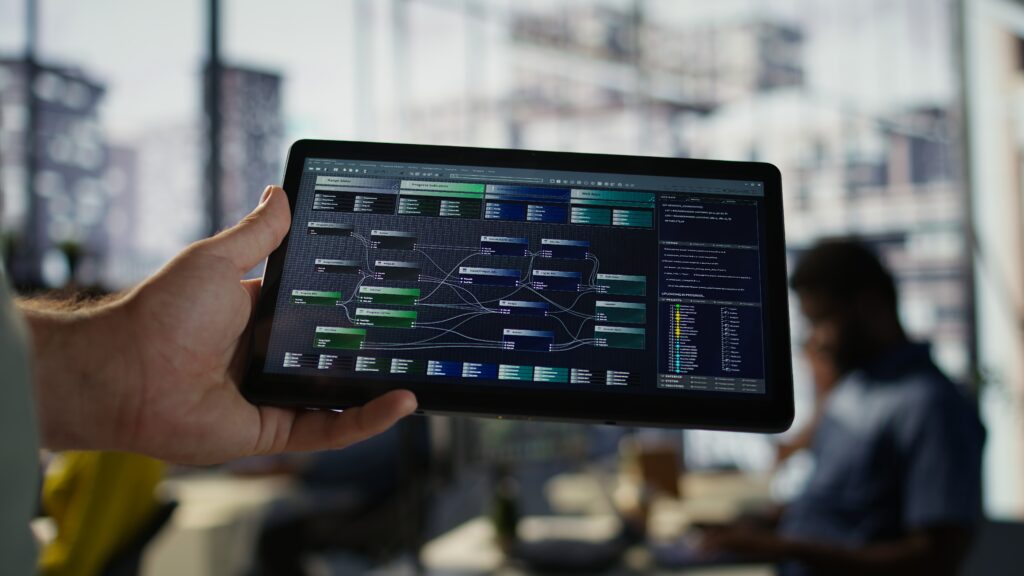
SAPUI5 provides a robust framework for developing modern web applications that connect to SAP and non-SAP backends. Its component-based architecture enables developers to create modular, maintainable applications that can evolve alongside business requirements. This flexibility is particularly valuable in rapidly changing business environments where agility provides competitive advantage.
The framework’s MVC (Model-View-Controller) paradigm enforces clean separation of concerns, making applications easier to test, maintain, and extend. For complex enterprise applications, this architecture significantly reduces technical debt compared to monolithic approaches. Organizations can build sustainable application portfolios that support long-term digital transformation initiatives while maintaining compatibility with core SAP systems.
Performance considerations are critical for enterprise applications, especially those handling large data volumes. Modern SAPUI5 development practices emphasize client-side optimization techniques including efficient data binding, asynchronous loading patterns, and careful state management. These approaches deliver responsive applications even when working with extensive datasets or complex business logic, ensuring positive user experiences even in demanding enterprise scenarios.
Most organizations operate hybrid SAP environments that combine on-premise systems, private cloud deployments, and SaaS solutions. Implementing Fiori in these complex landscapes requires careful architectural planning to ensure consistent experiences across diverse backend systems. Modern implementation approaches emphasize central Fiori Launchpad deployments that aggregate applications from multiple sources into a unified entry point.
Security considerations are paramount when extending backend systems through Fiori interfaces. Best practices include implementing proper authentication mechanisms (such as SAML or OAuth), ensuring appropriate authorization checks, and maintaining secure communication channels. These measures protect sensitive business data while enabling flexible access patterns that support modern work models including remote work and mobile access.
Organizations increasingly adopt phased implementation strategies for Fiori transformation, prioritizing high-impact processes rather than attempting comprehensive migrations. This approach delivers faster time-to-value while allowing for iterative refinement based on user feedback. By targeting processes with clear business metrics, organizations can demonstrate tangible return on investment, building momentum for broader transformation initiatives that modernize the entire application landscape.

tel: +48 450 064 128
e-mail: contact@sygeon.com
Globis Globe Trade Centre
Roosevelta 18
60-829 Poznań
NIP 7811909564