
Book a consultation with our Datasphere experts.
Connect to SAP and non-SAP sources through pre-built adapters and APIs that extract data while preserving its business context and relationships.
Model data with business terminology and rules that reflect your operations, making information immediately understandable to users across departments.
Choose between physical data movement or virtual data access based on performance needs, allowing data to remain in source systems when appropriate.
Access intuitive interfaces for data modeling, preparation, and analysis that enable business users to work directly with information without coding.
Utilize built-in machine learning to automate data mapping, cleansing, and cataloging tasks that traditionally require manual effort.
Create unified dashboards that combine financial, operational, and customer data to identify patterns and opportunities invisible in siloed reporting systems.
Integrate inventory, procurement, logistics, and sales data to reveal inefficiencies and enable data-driven decisions that reduce costs and improve service levels.

Build a 360-degree customer view by connecting transaction history, support interactions, and behavioral data to personalize offerings and improve satisfaction.
Unify financial data from multiple subsidiaries, regions, and systems to accelerate period-end closings and provide accurate, real-time financial insights.
Establish consistent data governance across systems to meet complex regulatory requirements while reducing the manual effort required for compliance reporting.
Learn how SAP and Salesforce integration can transform operations and improve scalability.
For a European chemical industry company, we implemented integration between 5 business units with 5 Salesforce instances, 3 SAP instances, and approximately 10 interfaces per business unit, including customer master data, orders, invoices, and deliveries. The project covered operations in Poland and Germany, with migration from SAP PO to SAP Integration Suite.
Client
Leading Retail Chain
Challenge
The client’s SAP PO platform couldn’t scale or support growth, hindering integrations with modern systems and rapid innovation.
Sulution
Introduction of SAP Integration Suite and migration of selected integrations to a new platform
Results
For a global manufacturing equipment provider, we created 30 interfaces connecting their Salesforce instance with SAP IS across EMEA, APAC, Americas, and Africa regions, using both API and event-based approaches for customer data, orders, and inventory management.
Client
Global Chemical Manufacturer
Challenge
A global manufacturer faced scaling issues with SAP PO after acquisitions, slowing A2A/B2B integration and operations.
Sulution
Results
Client
Industrial Equipment Manufacturer
Challenge
BizTalk’s outdated system blocked modernization, creating inefficiencies and adaptation challenges.
Sulution
Results
From initial data assessment through implementation, modeling, and analytics enablement, we provide comprehensive support that bridges technical and business perspectives.
Whether you’re looking for tailored migration solutions or just need more information, we’re here to support you every step of the way. Fill out the form below, and we’ll get back to you promptly.

Radosław Ruciński
SAP Integration Architect / co-owner
tel: +48 450 064 128
e-mail: radoslaw.rucinski@sygeon.com
SAP Datasphere goes beyond traditional warehousing by creating a business data fabric that preserves semantic context and business meaning. While data warehouses primarily store consolidated data, Datasphere connects, contextualizes, and makes data accessible, whether it’s physically moved or virtually accessed in place.
No. Datasphere can work with data in its original location through virtualization capabilities, allowing you to choose which data to physically integrate and which to access in place. This flexibility means you can start using the platform without extensive migration projects.
SAP Datasphere is built for openness, supporting connections to SAP Analytics Cloud, Power BI, Tableau, and other visualization tools. It serves as the unified data foundation while giving users freedom to use their preferred analysis and visualization tools.
Yes, Datasphere provides business-friendly interfaces that allow non-technical users to find, combine, and analyze data. IT teams typically handle initial setup and governance, but day-to-day data work can be performed by business users with minimal technical training.
Initial implementation can be completed in weeks, with specific use cases activated incrementally. Unlike traditional data warehouse projects that might take months or years before delivering value, SAP Datasphere enables a phased approach where each step provides tangible benefits.
Absolutely. SAP Datasphere includes pre-built connectors for many non-SAP applications, databases, and cloud services. Its open architecture allows integration with virtually any data source, making it suitable for heterogeneous IT landscapes.
The platform includes comprehensive security features, including role-based access controls, data masking, encryption, and audit logging. These capabilities help organizations maintain compliance with regulations like GDPR, while the centralized governance model simplifies security management across connected systems.
Traditional data integration approaches have created a significant gap between technical capabilities and business requirements. IT teams build complex data pipelines using technical terminology, while business users struggle to translate their needs into technical specifications. This communication barrier frequently results in data solutions that meet technical requirements but miss business objectives.
SAP Datasphere addresses this fundamental challenge by introducing a semantic layer that serves as a translator between technical data structures and business concepts. This layer preserves crucial business context – like the difference between “revenue” and “booked revenue” or the specific meaning of “customer” across different departments – that typically gets lost in traditional data integration.
For organizations struggling with cross-functional analytics, this semantic preservation is transformative. Finance, supply chain, and sales teams can finally work with consistent definitions and metrics, eliminating the hours spent debating whose numbers are correct. This semantic alignment enables more productive business conversations focused on insights rather than data reconciliation.

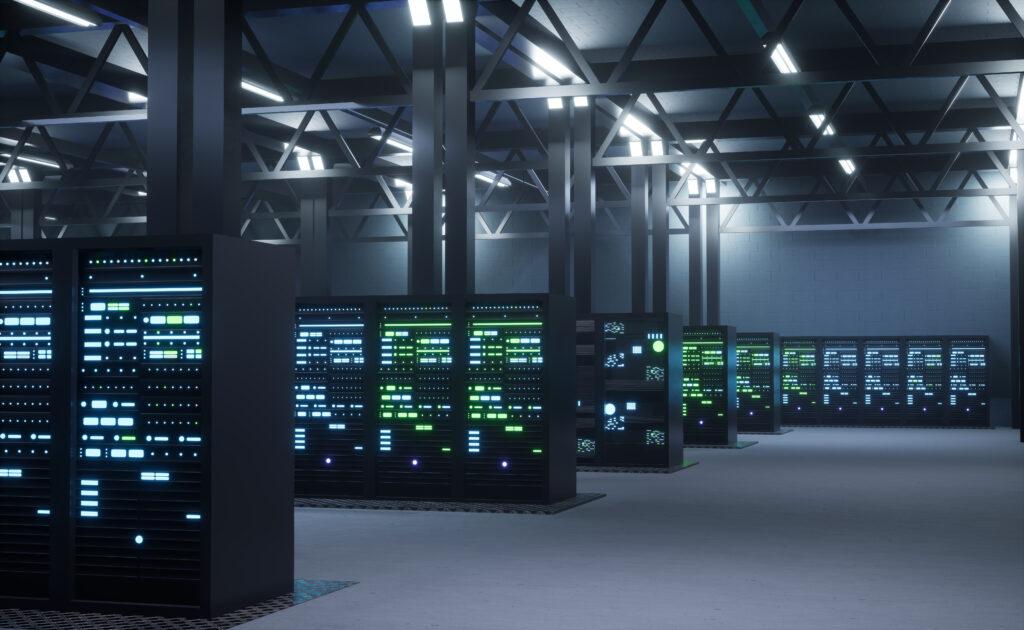
Data management strategies have evolved significantly from the days of centralized data warehouses. While traditional warehouses required physically moving all data to a single location, modern approaches recognize that data often delivers more value when it remains connected to its source systems.
SAP Datasphere represents this evolution through its business data fabric architecture. Rather than forcing organizations to choose between centralization and distribution, it creates a flexible network that connects data wherever it resides. This approach preserves the benefits of centralized governance while eliminating the bottlenecks and latency issues associated with massive data movements.
For large enterprises managing petabytes of data across multiple systems, this balanced approach provides immediate practical benefits. Critical data can be physically integrated for performance reasons, while less frequently accessed information remains in source systems. Business users get consistent, governed access regardless of where data physically resides, and IT teams gain the flexibility to optimize their data architecture for both performance and cost.
The tension between data democratization and governance has challenged organizations for years. Opening data access typically means accepting higher governance risks, while strict governance often creates access bottlenecks.
SAP Datasphere resolves this conflict by embedding governance into the fabric of data access. Instead of treating governance as a gatekeeper function that restricts access, it builds compliance, quality, and security controls directly into the data discovery and usage process. This design shift means that users naturally work within appropriate governance guidelines without experiencing them as barriers.
For regulated industries like financial services, healthcare, and pharmaceuticals, this integrated approach to governance is particularly valuable. It enables organizations to confidently expand data access to more business users without increasing compliance risks or audit concerns. The result is faster, more informed decision-making within a framework that maintains the necessary controls for regulated environments.

tel: +48 450 064 128
e-mail: contact@sygeon.com
Globis Globe Trade Centre
Roosevelta 18
60-829 Poznań
NIP 7811909564