
Accelerate digital transformation through API-led connectivity, turning every integration into a reusable asset.
MuleSoft is an integration platform that enables businesses to connect applications, data, and devices through APIs. Its flagship Anypoint Platform provides a unified environment for designing, developing, and managing integrations across cloud and on-premise systems.
Unlike traditional point-to-point integration methods, MuleSoft follows an API-led connectivity approach, allowing businesses to create reusable APIs that act as building blocks for future projects. This approach promotes agility, scalability, and faster deployment of digital solutions.
Reusable APIs and no-code integration tools enable developers to deliver 3x faster, freeing technical resources from repetitive tasks while reducing the specialized skills barrier.
Low-code tools and prebuilt templates empower business users to participate in integration projects, aligning technical implementations with actual business needs.
Centralized visibility and control of all APIs ensures consistent security implementation, version management, and usage tracking across your entire API ecosystem.
MuleSoft bridges the gap between IT and business teams by offering user-friendly tools, fostering better alignment in integration projects.
Connect and manage integrations across AWS, Azure, Google Cloud, and private clouds through a single platform that normalizes the differences between environments.
Organizations using Mulesoft’s API-led approach typically see 65% faster project completion, 30% lower maintenance costs, and significantly improved business agility.
Connect with our experts today!
Design APIs before implementation using RAML or OAS specifications, creating clear contracts between systems that address governance issues from the start.
Organize integrations into system, process, and experience layers that align with both technical requirements and business domains, improving cross-team collaboration.
Access 250+ pre-built connectors and templates for common integration patterns that dramatically reduce development time across multi-cloud environments.
Deploy and monitor integrations through a unified console whether they run in cloud, on-premises, or hybrid environments, simplifying multi-cloud complexity.
Enable business users to create their own integrations through a no-code interface while maintaining IT governance, directly addressing business-IT alignment gaps.

Empower marketing, sales, and service departments to create their own integrations between critical systems through MuleSoft Composer’s no-code interface. This democratized approach reduces IT backlog while maintaining governance and security standards.
Build consistent connections between applications running across different cloud platforms and on-premises systems. Create a unified application network that abstracts the complexity of multi-cloud environments behind well-designed APIs.
Develop a library of reusable integration assets that business and IT teams can assemble in different ways to quickly create new digital products and services. This approach transforms integration from a technical bottleneck into a business accelerator.
Client
Leading Retail Chain
Challenge
The client’s SAP PO platform couldn’t scale or support growth, hindering integrations with modern systems and rapid innovation.
Sulution
Introduction of SAP Integration Suite and migration of selected integrations to a new platform
Results
Client
Global Chemical Manufacturer
Challenge
A global manufacturer faced scaling issues with SAP PO after acquisitions, slowing A2A/B2B integration and operations.
Sulution
Results
Client
Industrial Equipment Manufacturer
Challenge
BizTalk’s outdated system blocked modernization, creating inefficiencies and adaptation challenges.
Sulution
Results
Whether you’re looking for tailored migration solutions or just need more information, we’re here to support you every step of the way. Fill out the form below, and we’ll get back to you promptly.

Radosław Ruciński
SAP Integration Architect / co-owner
tel: +48 450 064 128
e-mail: radoslaw.rucinski@sygeon.com
Mulesoft’s Anypoint Platform is an integration solution that connects applications, data, and devices across on-premises and cloud environments. It provides tools for designing, building, and managing APIs and integrations to enable consistent data flow between systems.
API-led connectivity organizes integrations into three layers (system, process, and experience APIs), each serving specific purposes. Unlike traditional point-to-point connections, this approach creates reusable assets that can be assembled in different ways, making integration more modular and adaptable to change.
Yes, Mulesoft bridges the gap between legacy on-premises systems and modern cloud-based applications. This capability allows organizations to extend existing investments while gradually adopting new technologies without disruption.
MuleSoft offers robust error handling and logging mechanisms, allowing developers to define custom error handling strategies, monitor integration flows, and quickly identify and resolve issues.
Mulesoft’s licensing depends on factors including the number of vCores (processing units), environments (development, testing, production), and required capabilities. We can help analyze your specific needs to develop a cost-effective licensing strategy tailored to your integration requirements.
Mulesoft supports virtually any integration scenario, including application-to-application, data integration, B2B integration, IoT connectivity, real-time events, and batch processing across cloud and on-premise environments.
Mulesoft provides comprehensive security features including API policies (authentication, rate limiting, throttling), encryption, role-based access control, and audit logging. The platform’s centralized governance ensures consistent policy enforcement across all integration points.
Implementation timelines vary by complexity, but organizations typically deploy their first simple APIs within 2-6 weeks.
No, while Mulesoft is used by many Fortune 500 companies, the platform scales to meet the needs of mid-sized businesses as well. The investment typically pays off through faster development cycles, reduced maintenance costs, and increased business agility.
Mulesoft’s API-led connectivity approach represents a fundamental shift in how organizations tackle integration challenges. Rather than connecting systems directly in a point-to-point fashion, this methodology creates purposeful APIs organized in three distinct layers – system, process, and experience.
This layered architecture transforms how teams collaborate on integration projects. System APIs abstract the complexity of backend systems, process APIs handle business logic, and experience APIs deliver data in formats suited for specific channels and consumers. Each layer can evolve independently, dramatically reducing the impact of changes and enabling faster adaptation to business needs.
For organizations struggling with rigid integration landscapes, Anypoint Platform provides the tools to implement this approach effectively. The platform’s API design capabilities, development frameworks, and management features work together to help teams build and maintain these layered architectures at scale, even across diverse technical environments.
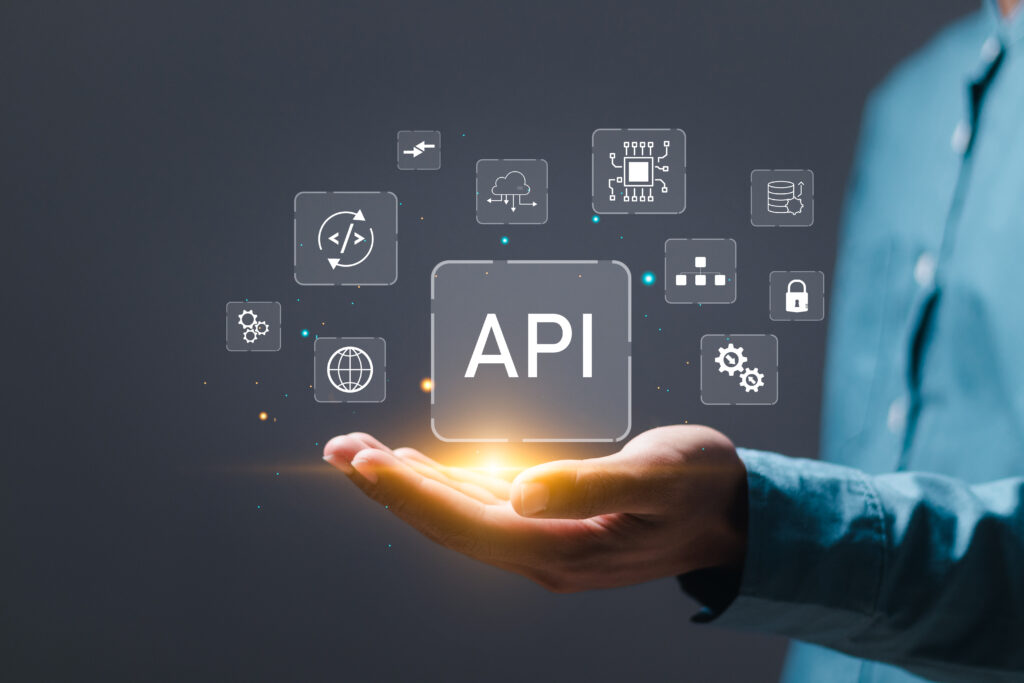

The true value of Mulesoft extends beyond connecting individual systems to creating an application network – an ecosystem of applications, data, and devices connected by purposeful, reusable APIs. This network becomes increasingly valuable with each new connection, unlike traditional integration approaches where complexity grows with each new endpoint.
Reusable APIs are the cornerstone of this approach. When properly designed and implemented through Anypoint Platform, these APIs become digital assets that can be discovered, self-served, and combined in new ways. This reusability fundamentally changes the economics of integration, allowing organizations to deliver new capabilities in days or weeks rather than months.
For technical leaders concerned about keeping pace with digital initiatives, this application network approach provides a strategic advantage. Rather than treating each integration as a custom project, teams build a growing library of capabilities that accelerate future initiatives while maintaining consistent governance and security practices.
Traditional integration has been the domain of specialized developers with deep technical knowledge, creating bottlenecks that delay business initiatives. Mulesoft’s Anypoint Platform is changing this dynamic by making integration more accessible to a broader range of technical and business users.
Through capabilities like MuleSoft Composer, business analysts can create their own integrations between common systems without writing code. Meanwhile, the platform’s design-first tools help less experienced developers build quality integrations by providing patterns, templates, and governance guardrails that enforce best practices.
This democratization of integration capabilities addresses one of the most persistent challenges in digital transformation – the gap between business needs and technical implementation. By enabling more teams to participate in integration work while maintaining appropriate governance, organizations can accelerate their digital initiatives without compromising on quality or security.

tel: +48 450 064 128
e-mail: contact@sygeon.com
Globis Globe Trade Centre
Roosevelta 18
60-829 Poznań
NIP 7811909564